 EN
EN
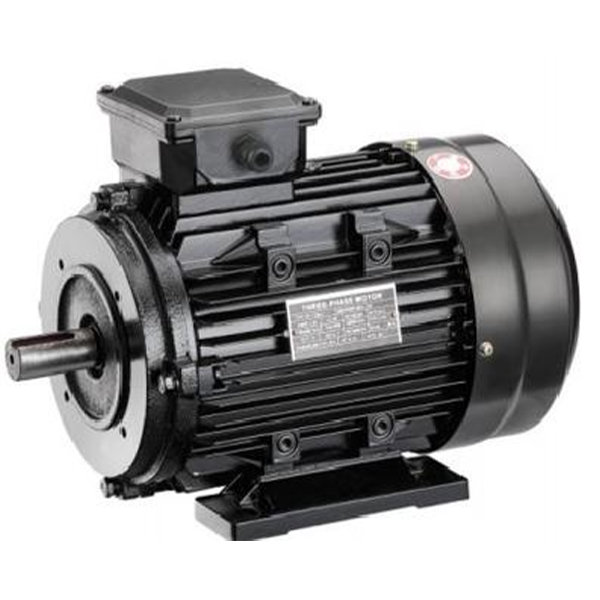
How High Efficiency Pump Motors Deliver Measurable Energy and Cost Savings
Conventional pump systems waste a substantial portion of the electricity they consume, driving up operational costs and carbon emissions worldwide. Upgrading to a high efficiency pump motor directly addresses this inefficiency, delivering verified energy reductions and rapid payback periods.
The Global Energy Waste Problem in Conventional Pump Systems
Pump systems account for roughly 20% of the world’s electric motor energy demand, yet many installations still rely on older, inefficient motor technologies. Standard motors (IE1 or IE2) convert only 85–88% of input power into useful work, with the remainder lost as heat. Continuous operation amplifies this waste: a single 50 kW pump running 6,000 hours per year can lose over 45,000 kWh annually to inefficiency. Beyond energy, wasted heat accelerates insulation breakdown and bearing wear, shortening motor lifespan and raising maintenance costs. This hidden drain creates a strong financial and environmental case for upgrading to higher efficiency classes.
From IE3 to IE5: Quantifying kWh Reduction and Payback Periods for High Efficiency Pump Motors
Each step up in International Efficiency (IE) class delivers measurable improvements. An IE3 (Premium Efficiency) motor typically reduces losses by 10–15% compared to IE2, while IE4 (Super Premium Efficiency) cuts an additional 15–20% of losses. IE5 (Ultra Premium Efficiency) motors further shrink energy waste, approaching 97% conversion efficiency. For a 30 kW pump running 8,000 hours annually, switching from IE2 to IE4 can save nearly 25,000 kWh per year — equating to over $2,500 in electricity costs at $0.10/kWh. Even with a higher upfront price, the payback period for a high efficiency pump motor upgrade often falls between one and three years, after which all savings flow directly to the bottom line.
Real-World Validation: Municipal Water Utility Achieves 27% Annual Energy Cost Reduction with IE4 SynRM High Efficiency Pump Motors
A municipal water utility in Europe replaced aging IE2 induction motors with IE4 synchronous reluctance (SynRM) motors in its main pumping station. The new high efficiency pump motors, combined with variable frequency drives, cut annual energy consumption by 27% — saving the utility over $40,000 in electricity bills each year. Additionally, the SynRM design eliminated rotor losses, reducing motor temperature rise by 15°C and extending insulation life. The project achieved a payback of less than 18 months, demonstrating that real-world energy savings align closely with theoretical projections. This case underscores how a targeted motor upgrade can deliver both immediate operational savings and long-term reliability gains.
Technical Advantages of High Efficiency Pump Motors Across Load Profiles
Why Pump Applications Demand Specialized Motor Design—Not Just Higher IE Labels
Selecting a high efficiency pump motor goes far beyond simply choosing a higher IE classification. Pump systems operate under unique hydraulic conditions, such as variable flow demands and continuous start-stop cycles, that require specific motor topologies. A standard high-efficiency motor may perform well at its rated load point but can suffer efficiency drops during partial load operation. In contrast, motors designed for pump applications—like synchronous reluctance (SynRM) or permanent magnet (PM) technologies—maintain superior efficiency over a wider operating range. Evidence shows that using a general-purpose IE4 motor in a throttled pump system can waste up to 8% more energy compared to a pump-optimized IE4 SynRM design. This is why pump-specific engineering, not just a higher IE label, is critical for achieving real-world energy savings.
IE4 vs. IE5: Efficiency Curve Comparison Under Variable-Speed Pumping Conditions
When running at variable speeds, IE5 high efficiency pump motors deliver a markedly flatter efficiency curve than IE4 units. Under 25% load, an IE5 motor can maintain over 92% efficiency, while an IE4 motor may dip below 85%. This difference becomes significant because pump systems often operate at 50–75% of maximum flow for extended periods. The table below demonstrates the tangible impact on annual energy consumption for a typical 75 kW pump motor running 6,000 hours per year.
| Load Point | IE4 Efficiency (%) | IE5 Efficiency (%) | Annual Energy Saved (kWh) |
|---|---|---|---|
| 100% Flow | 95.0 | 96.8 | 4,200 |
| 75% Flow | 90.3 | 95.4 | 14,500 |
| 50% Flow | 82.1 | 92.7 | 22,100 |
These savings translate into a payback period that is often under 18 months for retrofits, making IE5 a superior choice for facilities with fluctuating demand.
Global Market Adoption: Regulations, Barriers, and Lifecycle Cost Strategies
Mandatory IE4+ Rollouts: EU Ecodesign, US DOE 2023 Rules, and China GB 18613–2020
Global regulatory frameworks now mandate minimum IE4 efficiency standards for industrial motors, accelerating adoption of high efficiency pump motor technology. The EU Ecodesign Regulation (EU 2019/1781) requires IE4 for certain motor categories since July 2023. Similarly, the US Department of Energy (DOE) expanded its 2023 regulations to cover previously exempt small motors (≤500 horsepower), while China’s GB 18613–2020 standard aligns with IE3/IE4 tiers. These policies collectively eliminate lower-efficiency motors from major markets, though enforcement timelines vary by region. Manufacturers face penalties for non-compliance—up to $540,000 per violation under US DOE rules—creating urgent operational and financial incentives for modernization.
Bridging the Adoption Gap: Using Lifecycle Cost Analysis (LCCA) to Justify Upfront Investment in High Efficiency Pump Motors
Despite regulatory pressure, higher initial costs remain a barrier—up to 15–30% premium for IE4/IE5 motors versus IE3 models. Lifecycle Cost Analysis (LCCA) objectively quantifies long-term savings to overcome this hurdle. By calculating:
- Energy expenditure: IE4 motors consume 7–10% less power than IE3 equivalents
- Maintenance: Reduced vibration extends bearing life by ~40%
- Downtime: Reliability improvements cut production losses by 18%
Industrial facilities demonstrate 2–4 year payback periods despite premium pricing. Municipal water utilities report 27% annual energy cost reductions after upgrades, validating LCCA projections. Financial tools like the U.S. Energy Information Administration’s Motor Systems Savings Calculator help operators model 10-year ownership costs, proving high efficiency pump motors deliver net-positive ROI across most operational profiles.
FAQ Section
Why should I consider upgrading to a high efficiency pump motor?
Upgrading can significantly reduce energy consumption, lower operational costs, and improve motor lifespan, delivering a high return on investment.
What are the differences between IE3, IE4, and IE5 motors?
IE3 motors offer premium efficiency, IE4 provides super-premium efficiency with 15–20% less energy loss, and IE5 delivers ultra-premium efficiency, minimizing waste significantly across load profiles.
How do high efficiency pump motors perform under variable load conditions?
Pump-optimized high efficiency designs, such as SynRM and PM technologies, maintain superior efficiency across a range of load points compared to standard motors.
Are there any government regulations pushing for high efficiency motor adoption?
Yes, regulations like the EU Ecodesign Regulation, US DOE 2023 rules, and China’s GB 18613–2020 mandate higher efficiency classes like IE4 and above for specific motor categories.
What is the estimated payback period for switching to high efficiency pump motors?
Depending on the operational profile and initial investment, the payback period is typically between 1 and 3 years for IE4 or IE5 motors.
Table of Contents
-
How High Efficiency Pump Motors Deliver Measurable Energy and Cost Savings
- The Global Energy Waste Problem in Conventional Pump Systems
- From IE3 to IE5: Quantifying kWh Reduction and Payback Periods for High Efficiency Pump Motors
- Real-World Validation: Municipal Water Utility Achieves 27% Annual Energy Cost Reduction with IE4 SynRM High Efficiency Pump Motors
- Technical Advantages of High Efficiency Pump Motors Across Load Profiles
- Global Market Adoption: Regulations, Barriers, and Lifecycle Cost Strategies
- FAQ Section