
 EN
EN
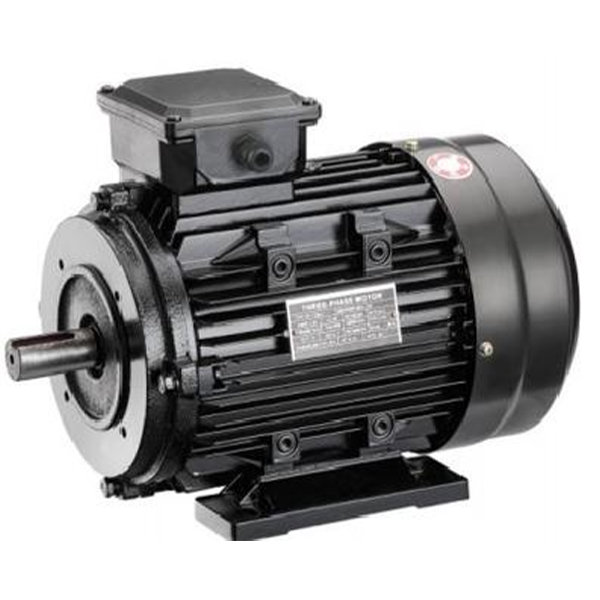
Global Leaders in Electric Motor Manufacturing: Capabilities and Strategic Focus
The global electric motors market is projected to exceed $205 billion by 2029, driven by rapid electrification across industries. Dominating this space, top manufacturers—including ABB, Siemens, NIDEC, Wolong Electric, and WEG—combine vast production scale, deep R&D investment, and diversified portfolios to serve industrial, automotive, and commercial applications. These leaders maintain extensive regional footprints and pursue aggressive growth strategies: acquisitions, targeted product launches, and capacity expansions focused on energy-efficient motor lines and digital control integration. Their efforts center on the largest market segment—AC motors for industrial automation—where demand is fueled by rising automation adoption and the need for low-noise, high-reliability machinery. Strategic priorities increasingly include custom solutions for EV drivetrains and renewable energy systems, supported by broader sustainability initiatives—from improved recyclability to compliance with EU Ecodesign and other emerging regulatory frameworks.
Innovation Differentiation Among Electric Motor Manufacturers
As competition intensifies, innovation has become the primary differentiator for electric motor manufacturers. Beyond incremental efficiency gains, leaders now compete on three disruptive axes: power density, control precision, and thermal resilience. This technological arms race is fundamentally reshaping product roadmaps and R&D priorities across the industry.
Axial-Flux, Solid-State Control, and Ultra-High Efficiency (97%+) Breakthroughs
Axial-flux architectures are enabling unprecedented power-to-weight ratios—particularly critical for aviation and high-performance EVs, where mass reduction directly extends operational range. Concurrently, the shift to silicon carbide (SiC) and gallium nitride (GaN) semiconductors in motor controllers has reduced switching losses by over 30% compared to traditional IGBTs, helping system-level efficiency surpass 97%. These solid-state controls also support finer torque modulation—essential for Advanced Driver Assistance Systems (ADAS) safety functions requiring millisecond-level response precision. Meanwhile, manufacturers pursuing ultra-high efficiency benchmarks now use computational electromagnetics to optimize electromagnetic fields and minimize stray losses—the last major barrier to practical 97%+ efficiency. Modularization strategies further allow customization for applications like robotics joint actuators or HVAC blowers without sacrificing economies of scale.
Sector-Specific Adoption: How Industrial, Automotive, and Aerospace Demand Shapes Electric Motor Manufacturers
Electric motor manufacturers face distinct pressures from three high-growth sectors: industrial automation, automotive electrification, and aerospace innovation. Each demands unique performance characteristics. Automotive prioritizes high torque density and robust thermal management; industrial applications emphasize reliability and energy efficiency across conveyor systems and robotics; aerospace requires lightweight, compact designs with extreme reliability and redundant control. These divergent needs drive specialized motor architectures and integrated power electronics—often developed in close collaboration with OEMs.
Renewables, Aviation, and Heavy Transport: Use Cases Accelerating Motor Innovation
Use cases such as wind turbine generators, electric aircraft propulsion, and heavy transport vehicles are pushing motor innovation beyond traditional limits. In wind energy, large synchronous motors enable grid-scale storage and pitch control systems that must endure extreme temperatures and continuous cycling. Aviation prototypes require motors with power-to-weight ratios exceeding 10 kW/kg and fail-safe winding topologies for eVTOL applications. Heavy transport—including mining trucks transitioning to hybrid-electric drivetrains—demands motors capable of delivering over 1 MW peak power while surviving intense vibration and dust exposure. Collectively, these applications accelerate investment in advanced materials like amorphous steel and next-generation cooling techniques—forcing manufacturers to reimagine design constraints and supply chain resilience.
The Evolving Supplier–OEM Relationship in the Electric Motor Ecosystem
The partnership dynamics between electric motor manufacturers and OEMs are shifting from transactional supply chains toward integrated innovation ecosystems. As demand surges for specialized motors across automotive, aerospace, and industrial applications, manufacturers now co-develop components during early design phases to optimize performance and compatibility. This collaborative model replaces traditional vertical integration, cutting development cycles by 30–50% while ensuring seamless integration with power electronics and IoT systems. Joint R&D investments reached $2.1B globally in 2023, reflecting shared commitments to next-gen efficiency standards and AI-driven motor controls.
From Vertical Integration to Collaborative Development: Tesla, Rivian, and Stellantis Compared
Three distinct models illustrate this evolution:
- A vertically integrated pioneer develops proprietary motors in-house, prioritizing supply chain control but incurring 40% higher R&D costs
- An emerging EV manufacturer uses open-architecture partnerships, co-designing axial-flux motors with suppliers to accelerate performance gains
- A legacy automaker blends both approaches, maintaining core IP development while outsourcing auxiliary systems to specialized manufacturers
This spectrum highlights how electric motor manufacturers balance innovation ownership with speed-to-market. Collaborative frameworks now drive 67% of industry breakthroughs in solid-state motor controls and ultra-high efficiency designs—compared to 22% from purely vertical models. As thermal management and power density requirements intensify, supplier-OEM co-development has become essential for scaling next-generation electrification.
FAQ Section
What drives the demand for electric motors globally?
The demand for electric motors is driven by rapid industrial electrification, increasing automation in industries, and the transition to renewable energy sources and electric vehicles.
Which sectors are key to electric motor innovation?
High-growth sectors shaping motor innovation include industrial automation, automotive electrification, and aerospace, all of which require unique performance characteristics.
What are axial-flux architectures in electric motors?
Axial-flux architectures are a type of motor design that offers high power-to-weight ratios, making them ideal for aviation and high-performance electric vehicles.
How do manufacturers collaborate with OEMs?
Manufacturers partner with OEMs through co-developing components during early design phases, cutting development cycles and optimizing integration with power electronics and IoT systems.
Table of Contents
- Global Leaders in Electric Motor Manufacturing: Capabilities and Strategic Focus
- Innovation Differentiation Among Electric Motor Manufacturers
- Sector-Specific Adoption: How Industrial, Automotive, and Aerospace Demand Shapes Electric Motor Manufacturers
- The Evolving Supplier–OEM Relationship in the Electric Motor Ecosystem
- FAQ Section