
 EN
EN
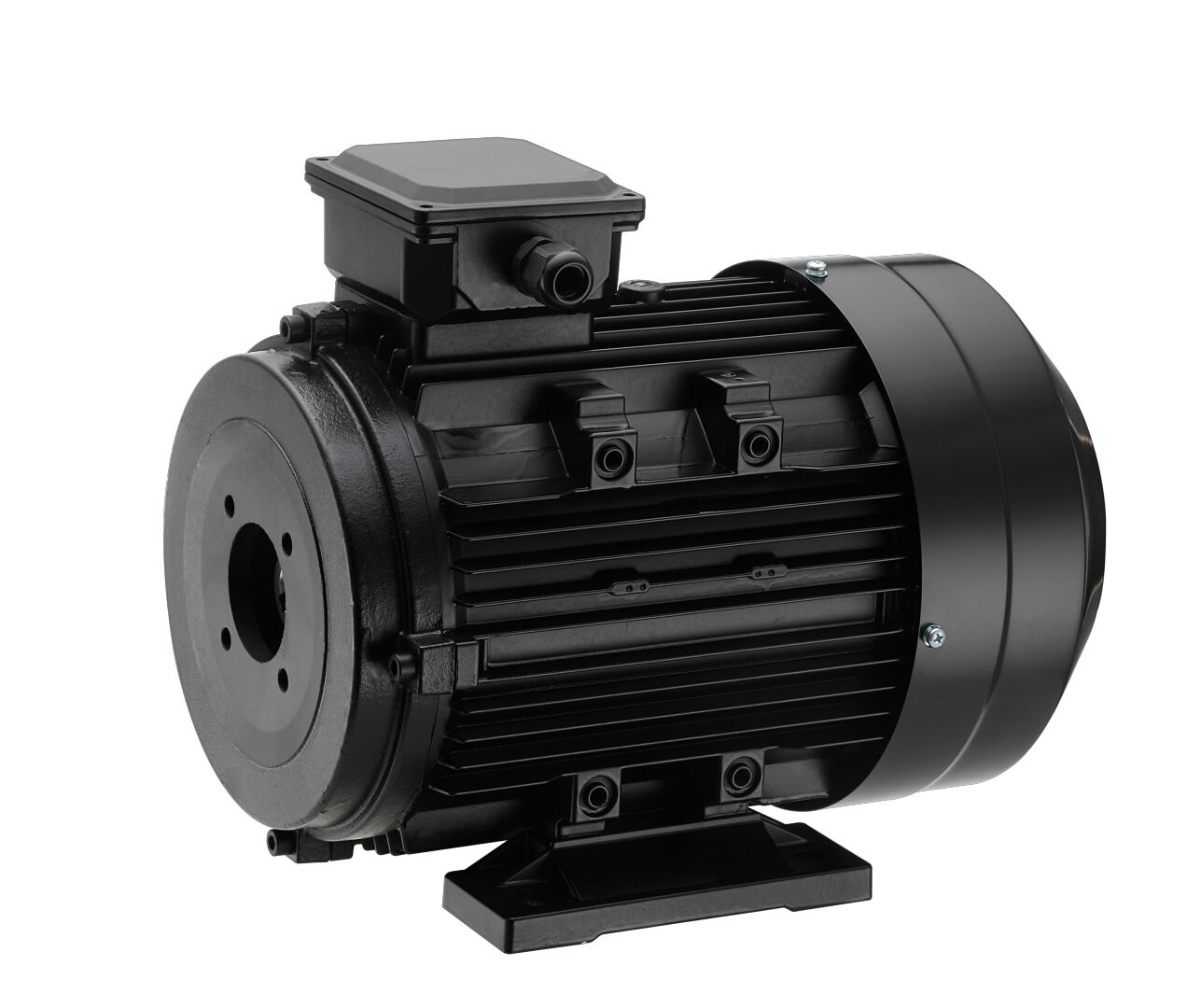
Why Permanent Magnet Electric Motors Deliver Superior Energy Efficiency
Eliminating Rotor Copper Losses Through Self-Excited Magnetic Fields
In induction motors, rotor current must be induced to generate a magnetic field—causing significant I²R (copper) losses in rotor bars and end rings. Permanent magnet (PM) motors eliminate this inefficiency entirely: their rotors contain embedded magnets that produce a self-excited, synchronous magnetic field without electrical input. As a result, rotor copper losses are zero. The constant, aligned magnetic field also reduces hysteresis and eddy current losses in the rotor core. According to a 2025 industry analysis by the U.S. Department of Energy’s Motor Systems Resource Center, PM motors achieve 92–95% full-load efficiency, compared to 85–88% for standard induction motors—the gap driven primarily by the elimination of rotor losses. This inherent efficiency yields cooler operation and enhanced long-term reliability.
Reduced Stator Excitation Demand and Lower Core Losses
Because the rotor’s magnetic field is always present, the stator doesn’t need to supply magnetizing current to excite it. This lowers overall stator excitation demand, reducing both stator copper losses and peak flux density in the core. Lower flux density directly minimizes hysteresis and eddy current losses in the stator laminations. Additionally, designers can optimize stator windings for lower resistance—further improving efficiency. The combined effect enables higher power density and reduced temperature rise versus equivalent induction motors. Energy savings from stator-side improvements alone contribute 3–5% additional efficiency—particularly valuable in continuous-duty applications where cumulative gains compound over time.
Real-World Validation: IE4 PMAC vs. NEMA Premium AC Motors in HVAC Blower Applications
HVAC blowers operate up to 8,000 hours annually, making even marginal efficiency gains highly impactful. Independent testing by the Air Movement and Control Association (AMCA) International confirms consistent advantages for IE4 permanent magnet AC (PMAC) motors over NEMA Premium (IE3) induction motors in blower duty. Key findings include:
| Parameter | IE4 PMAC Motor | NEMA Premium AC Motor (IE3) |
|---|---|---|
| Efficiency at full load | 95.0% | 90.5% |
| Efficiency at 75% load | 94.2% | 89.0% |
| Part-load efficiency drop | Minimal (<1%) | Significant (3–5%) |
| Annual energy consumption (10 hp, 8,000 hrs) | 34,500 kWh | 38,200 kWh |
The PMAC motor saves nearly 3,700 kWh per year per unit—over 37,000 kWh across a decade. At $0.12/kWh, that represents more than $4,400 in avoided energy costs per motor. These results confirm that PM motor efficiency isn’t theoretical: it delivers verified financial and carbon-reduction benefits in real-world, high-utilization HVAC systems.
Enhanced Performance Characteristics of Permanent Magnet Electric Motors
Wider Constant-Power Speed Range for Dynamic Load Adaptation
PM motors deliver a broader constant-power speed range than induction motors, enabling efficient response to fluctuating loads. Because the rotor’s magnetic field is fixed and synchronous—not dependent on slip-induced currents—the motor maintains strong torque production across a wide speed band. This eliminates the sharp efficiency decline common in induction motors above base speed. In applications like variable-flow pumps and centrifugal fans, this allows precise speed modulation without oversizing or mechanical gear reduction—reducing system complexity and improving overall energy matching.
Precision Torque Control via Vector-Driven Inverters and Low-Speed Stability
When paired with a modern vector-controlled inverter, PM motors provide exceptional low-speed torque accuracy and stability. The intrinsic magnetic coupling between the permanent magnet rotor and rotating stator field eliminates slip-related lag and torque ripple. Combined with real-time current vector control, this enables smooth, cogging-free operation down to zero speed—critical for robotics, precision conveyors, and servo-driven machinery. With no rotor winding losses to dampen dynamic response, the control loop remains fast and stable, delivering repeatable positioning and tighter process control.
Total Cost of Ownership: Balancing Upfront Investment and Lifecycle Savings
Industrial Pump Case Study: Payback Period and ROI of Permanent Magnet Electric Motors
Total Cost of Ownership (TCO) analysis reveals the full economic value of PM motors—moving beyond purchase price to weigh energy, maintenance, and lifecycle impacts. For industrial pumps—where motors consume 60–70% of system energy—this perspective is essential. A robust TCO model includes:
- Initial investment: Motor acquisition, drive integration, and commissioning
- Operational expenses: Energy use, preventive maintenance, unplanned downtime
- End-of-life value: Resale potential or recycling value
A representative retrofit project across 40 centrifugal pumps at a Midwest manufacturing facility illustrates the outcome:
- 12% higher initial motor cost
- 9.4% average energy reduction (validated across operating loads)
- 42% lower maintenance spend over 10 years (no rotor bar failures, reduced bearing stress)
- 2.3-year simple payback
- 189% ROI over seven years
This case—documented in the U.S. DOE’s Motor Systems Assessment Guide—demonstrates how PM motors convert upfront capital into sustained operational advantage, especially where duty cycles are long, variable, or mission-critical.
Frequently Asked Questions
What is the main advantage of permanent magnet electric motors over induction motors?
The main advantage is their superior energy efficiency. Permanent magnet electric motors eliminate rotor copper losses, which are significant in induction motors, leading to cooler operation and enhanced reliability.
How do PM motors achieve higher efficiency in HVAC systems?
PM motors achieve higher efficiency by maintaining a consistent magnetic field, reducing rotor and stator losses, and minimizing part-load efficiency drops. In HVAC systems, these improvements lead to notable energy cost savings over time.
Is the initial cost of PM motors justified?
Yes, despite a higher upfront cost, PM motors provide significant lifecycle savings through reduced energy consumption, lower maintenance costs, and extended reliability.
What industries benefit most from PM motors?
Sectors with high-utilization applications like HVAC systems, industrial pumps, robotics, and precision machinery benefit most due to the motors' efficiency and performance advantages.
How do PM motors support dynamic load adaptation?
PM motors enable a wider constant-power speed range and precise torque control, allowing efficient operation under fluctuating loads without oversizing or complex mechanical systems.