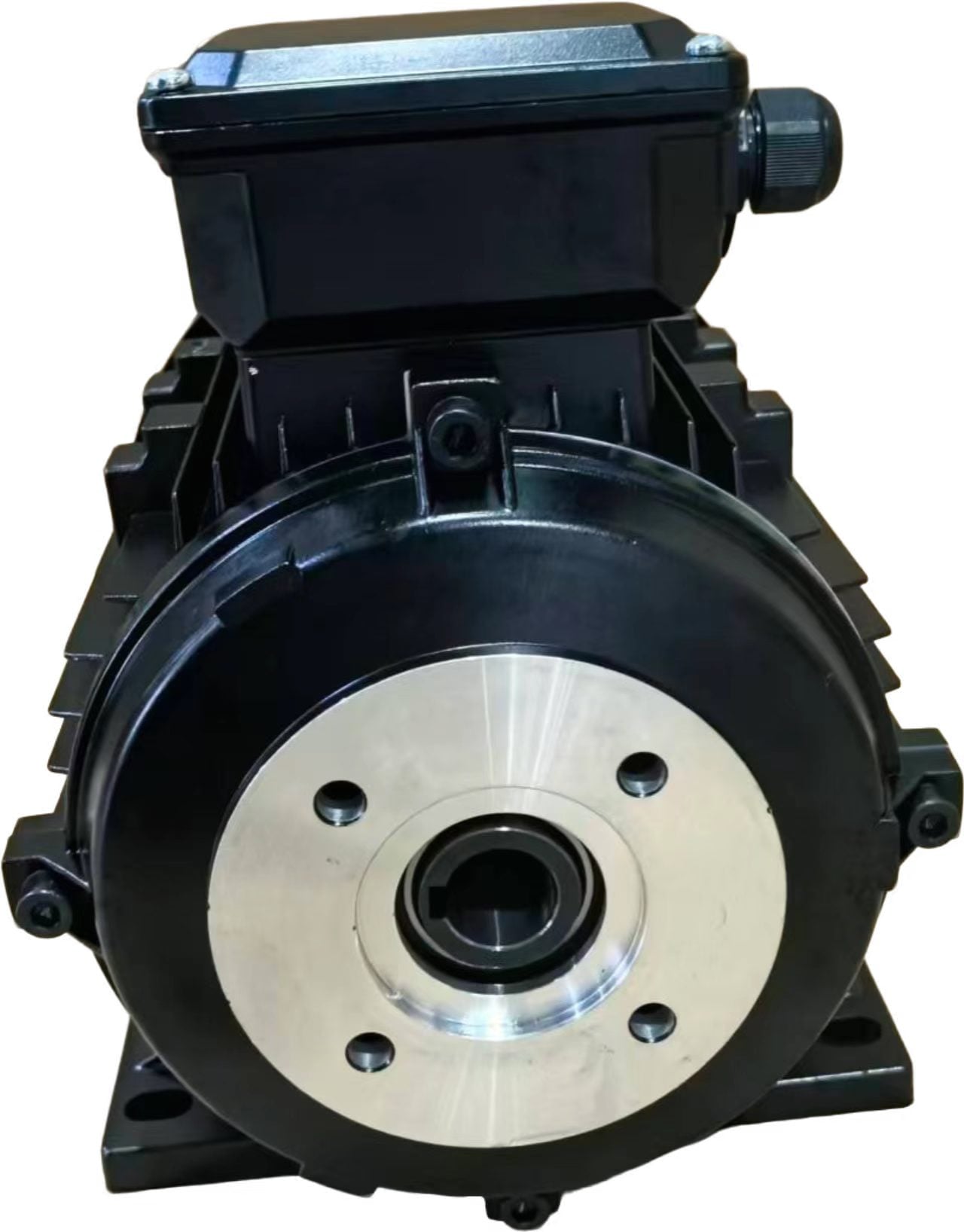
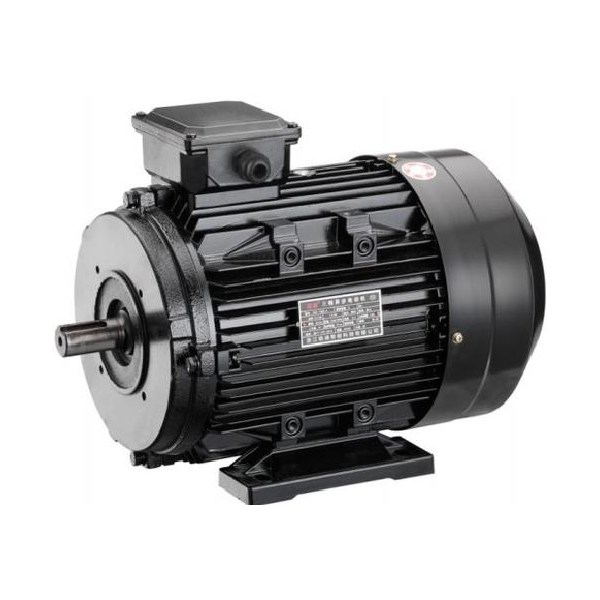
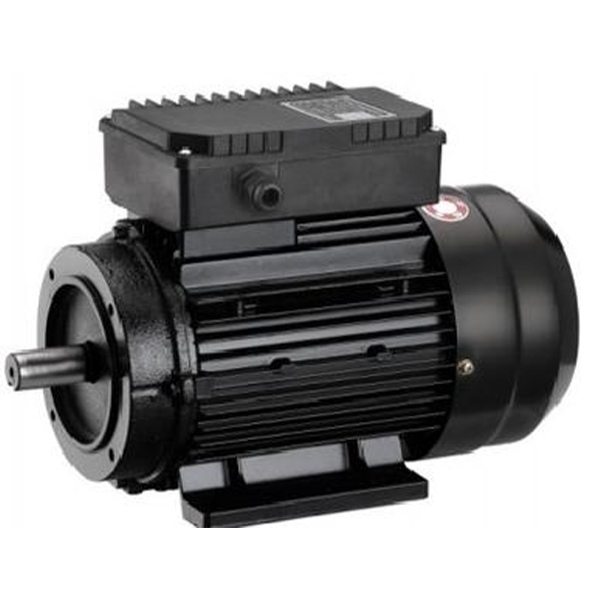
The YE2 series three-phase induction motor is a totally enclosed, self-fan-cooled, squirrel-cage motor built for continuous duty on fans, pumps and other equipment that runs under long-term load. Where a standard-efficiency motor turns a large share of its input into heat, the YE2 design works at the IE3 efficiency class defined in IEC 60034-30-1, and the gains are largest exactly where they matter most — machines that run thousands of hours a year rather than cycling on and off.
For a plant operator the case for IE3 is arithmetic, not marketing. A motor running continuously on a pump or fan consumes its own purchase price in electricity many times over during its service life, so a few percentage points of efficiency translate into a recurring saving on every operating hour. Across the YE2 range, peak efficiency reaches 95.2% in the 2-pole group and 94.1% in the 6-pole group, against 80.7% and 78.9% respectively at the smallest 0.75 kW ratings — which is why correct frame and pole selection matters as much as the series itself.
The series covers 0.75 kW to 90 kW across frame centre heights H80 to H280, with 2, 4, 6 and 8 pole options, IP55 enclosure protection as standard and Class F insulation with temperature rise evaluated to Class B. Mounting dimensions and power ratings conform to IEC 60072-1, and losses and efficiency are determined in accordance with IEC 60034-2-1, so published efficiency figures can be verified against a test report rather than taken on trust.
IE3 efficiency class (IEC 60034-30-1)
Up to 15% lower energy consumption
Peak efficiency 95.2% (2-pole) and 94.1% (6-pole)
S1 continuous duty rating
Optimised for fans and pumps
Class F insulation, 80 K temperature rise evaluation
Die-cast aluminium rotor
IP55 enclosure protection
IEC 60072-1 mounting dimensions
Power range 0.75 kW to 90 kW, frames H80 to H280
Efficiency in the YE2 series is not a single number — it is a curve that rises with frame size and varies with pole count. The values below are taken from the series technical parameter tables.
Rating |
Poles |
Speed at 50 / 60 Hz |
Efficiency |
0.75 kW |
2 |
3000 / 3600 r/min |
80.7% |
0.75 kW |
6 |
1000 / 1200 r/min |
78.9% |
30 kW |
6 |
1000 / 1200 r/min |
92.9% |
Series peak, 2-pole |
2 |
3000 / 3600 r/min |
95.2% |
Series peak, 6-pole |
6 |
1000 / 1200 r/min |
94.1% |
Three practical consequences follow from this curve:
Frame size drives efficiency.
Pole count matters.
Savings compound with running hours.
Efficiency gains should always be confirmed against the technical parameter table for the specific model, since values vary by frame, pole count and voltage.
Parameter |
Details |
Series |
YE2 high-efficiency three-phase induction motor |
Construction |
Totally enclosed, self-fan-cooled, squirrel-cage |
Power range |
0.75 kW – 90 kW |
Frame centre height |
H80 – H280 |
Poles |
2, 4, 6, 8 |
Efficiency class |
IE3 (IEC 60034-30-1) |
Peak efficiency |
95.2% (2-pole range); 94.1% (6-pole range) |
Energy saving |
Up to 15% versus IE2-class standard motors |
Insulation class |
Class F, temperature rise evaluated to Class B; Class H available |
Enclosure protection |
IP55 (IP54 available) |
Cooling method |
IC411 |
Duty type |
Continuous duty (S1) |
Temperature rise |
Evaluated at 80 K, giving a large thermal margin |
Rotor |
Die-cast aluminium |
Mounting |
To IEC 60072-1 |
Condition |
Value |
Ambient temperature |
-15 °C to +40 °C |
Altitude |
Not exceeding 1000 m |
Rated voltage |
380 V; any voltage between 220 V and 760 V available |
Frequency |
50 Hz / 60 Hz |
Connection |
Star (Y) for motors rated 3 kW and below; Delta (△) for motors rated 4 kW and above |
Duty type |
Continuous duty (S1) |
Degree of protection |
IP55 (IP54 available) |
Insulation class |
Class F, temperature rise evaluated to Class B; Class H available |
Cooling method |
IC411 |
Each model in the series is published with a full set of performance data so the efficiency case can be checked model by model:
Rated output (kW and HP)
Rated current (IFL, A)
Rated speed (r/min)
Efficiency (EEF, %)
Power factor (cos φ)
Rated torque (N·m)
Locked-rotor torque, locked-rotor current and maximum torque ratios
Noise level (dB)
Weight (kg)
Fans and blowers
Water pumps and process pumps
Machine tools
Compressors
Conveying machinery
HVAC and ventilation plant
Plant retrofit and efficiency upgrade programmes
OEM machinery builds
GB/T 28575-2020
IEC 60034-30-1
IEC 60034-2-1
IEC 60072-1
GB 18613
Efficiency-based selection:
Model-level data:
Voltage and frequency options:
Documentation:
Retrofit review:
Technical demo:
Q: What efficiency class is the YE2 three-phase induction motor?
A: YE2 motors are built to the IE3 efficiency class defined in IEC 60034-30-1 and comply with the applicable GB 18613 energy efficiency requirements. Efficiency is determined in accordance with IEC 60034-2-1.
Q: How much energy can a YE2 motor save compared with a standard motor?
A: Up to 15% lower energy consumption than an IE2-class standard motor. The actual saving depends on the specific model, its load profile and annual running hours, so the gain should be calculated against the technical parameter table for the frame you are considering.
Q: Why does efficiency vary so much across the series?
A: Efficiency rises with frame size — 80.7% at 0.75 kW (2-pole) against 95.2% at the top of the 2-pole range. Pole count also matters: at equal output a 2-pole motor is generally more efficient than a 6-pole motor because losses per unit output are lower at higher speed. Choosing the right frame and pole count is therefore the largest single efficiency decision.
Q: Are YE2 motors suitable for continuous duty?
A: Yes. The series is rated S1 continuous duty, which is the duty type assumed in the efficiency figures and the application where IE3 motors deliver their fastest payback.
Q: Can a YE2 motor replace the existing motor on my machine?
A: Mounting dimensions and power ratings conform to IEC 60072-1, so a YE2 motor can replace an equivalent IEC-frame motor. Confirm the frame centre height, shaft dimensions, foot spacing and mounting code against your machine drawing before ordering — and where the replacement frame differs, check that the driven equipment tolerates the new speed.
Q: What is the temperature rise and insulation class?
A: The series uses Class F insulation with temperature rise evaluated at 80 K, giving a large thermal margin and long insulation life. Class H insulation is available on request.
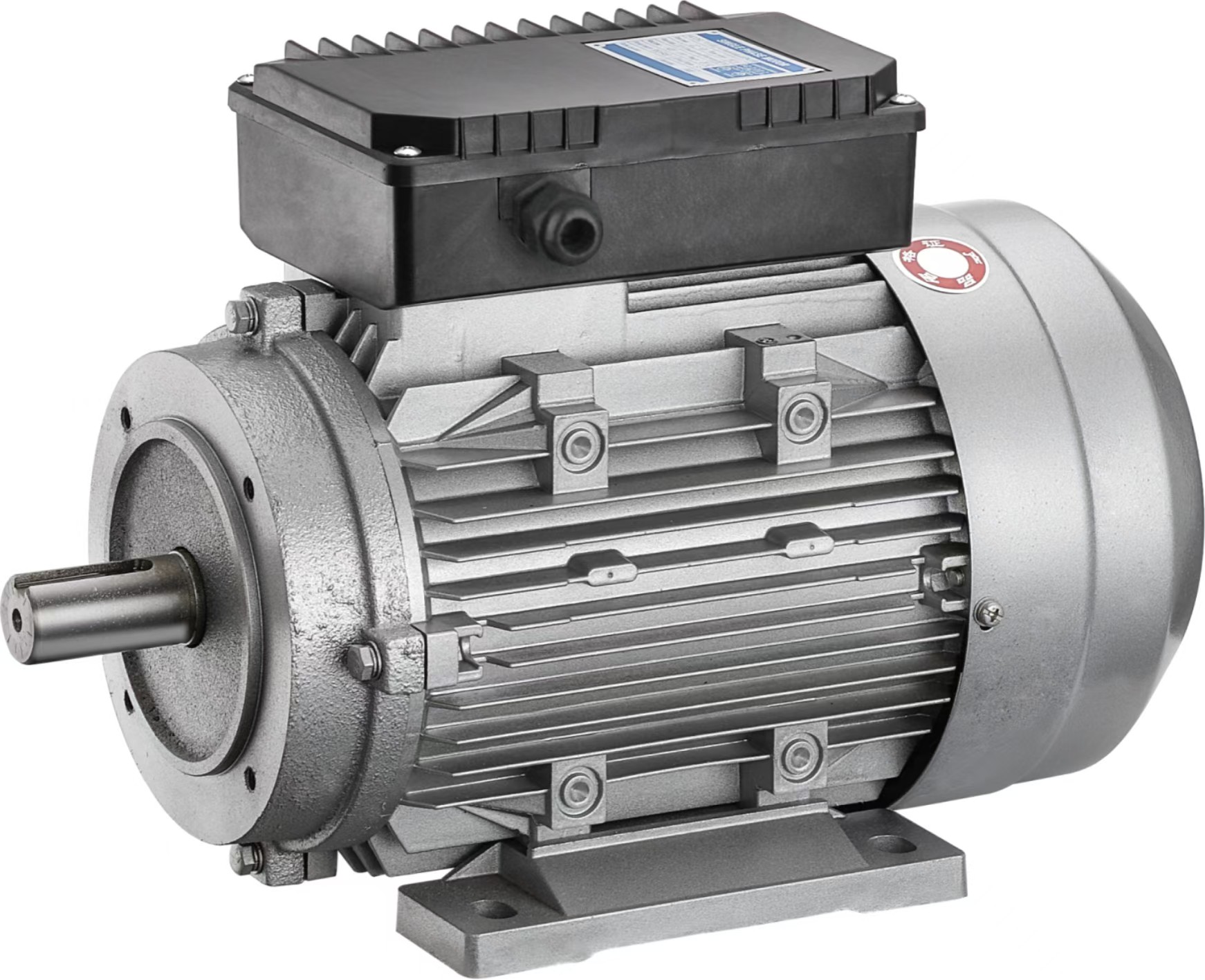
YY Single-Phase Asynchronous Motor Series
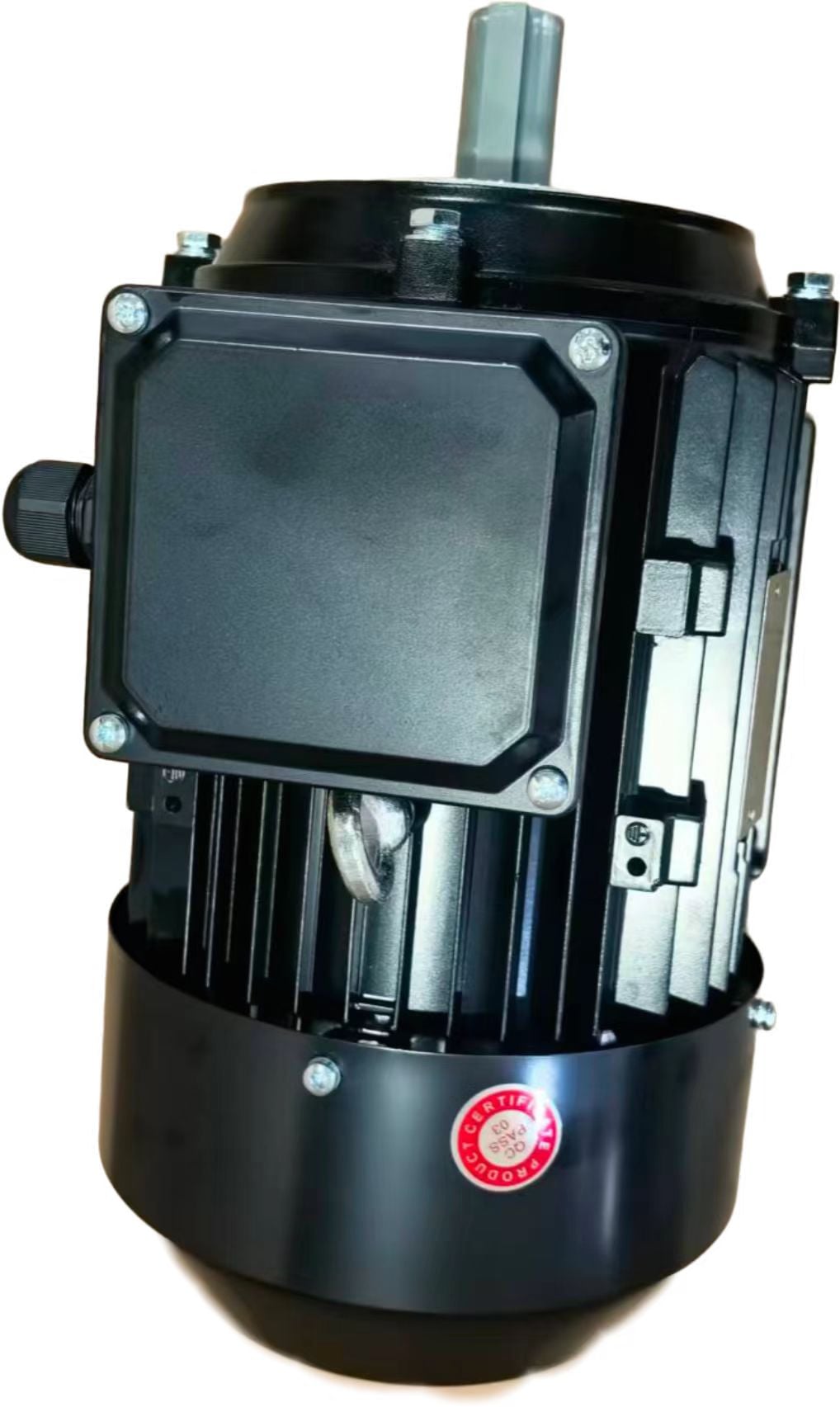
YE2 Three-Phase Induction Motor Series
YE2 Series Three-Phase Induction Motors
YL Series Single-Phase Asynchronous Motor

 EN
EN